TORUS AI/ML engine
TORUS turns raw signal into a smaller, more certain facility event at each stage, so what travels the network and reaches the operator is a validated track, not a raw feed or a bare alarm.
Capability brief TORUS-MEG gateway
01 · Why AI, not thresholds
A tripwire counts; an engine understands.
| Capability | Detail |
|---|---|
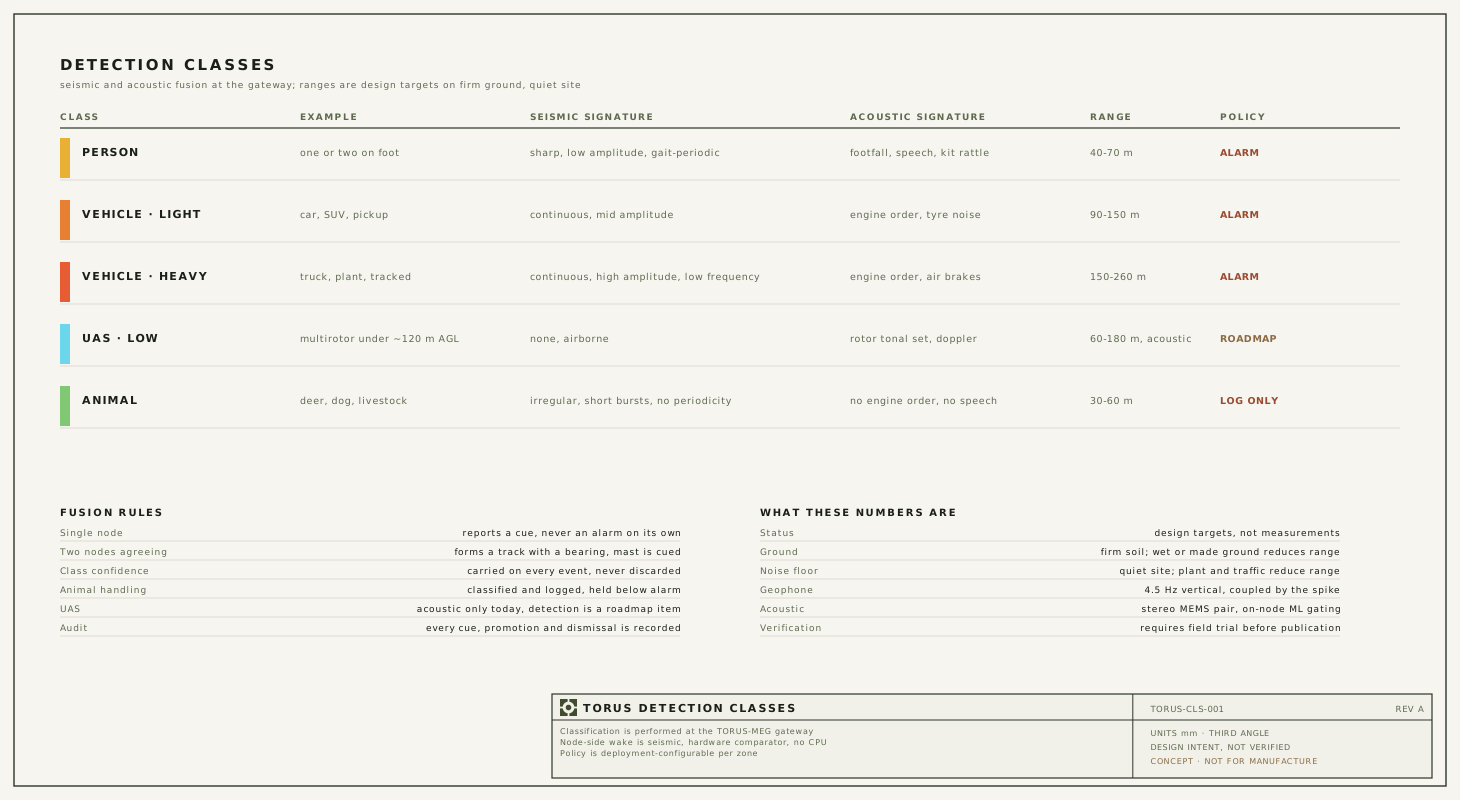
| Classify by type, not just presence | Footfall, vehicle, or digging; voice, engine, or breaking glass. The system reports what it is, with a confidence, not merely that something happened. |
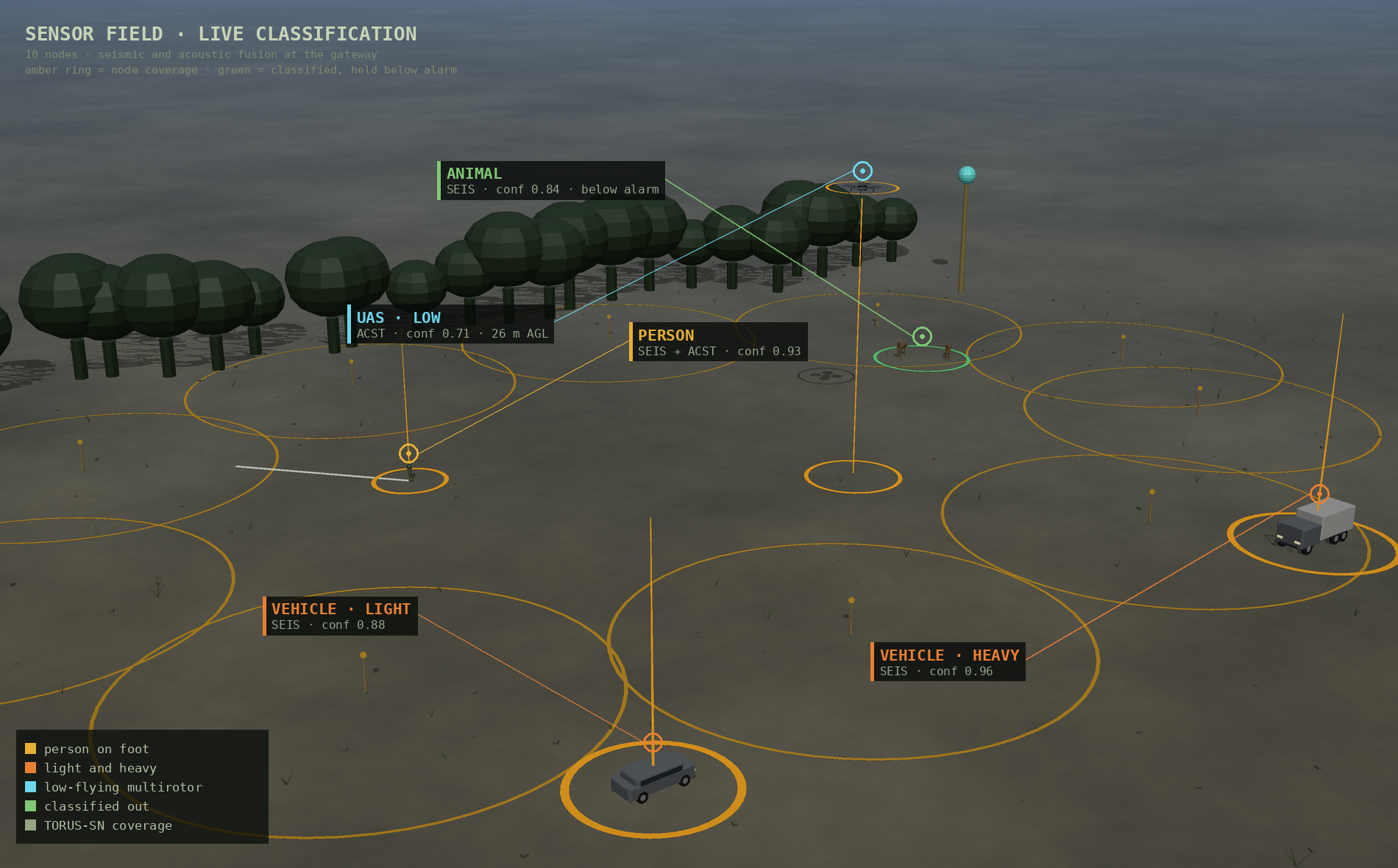
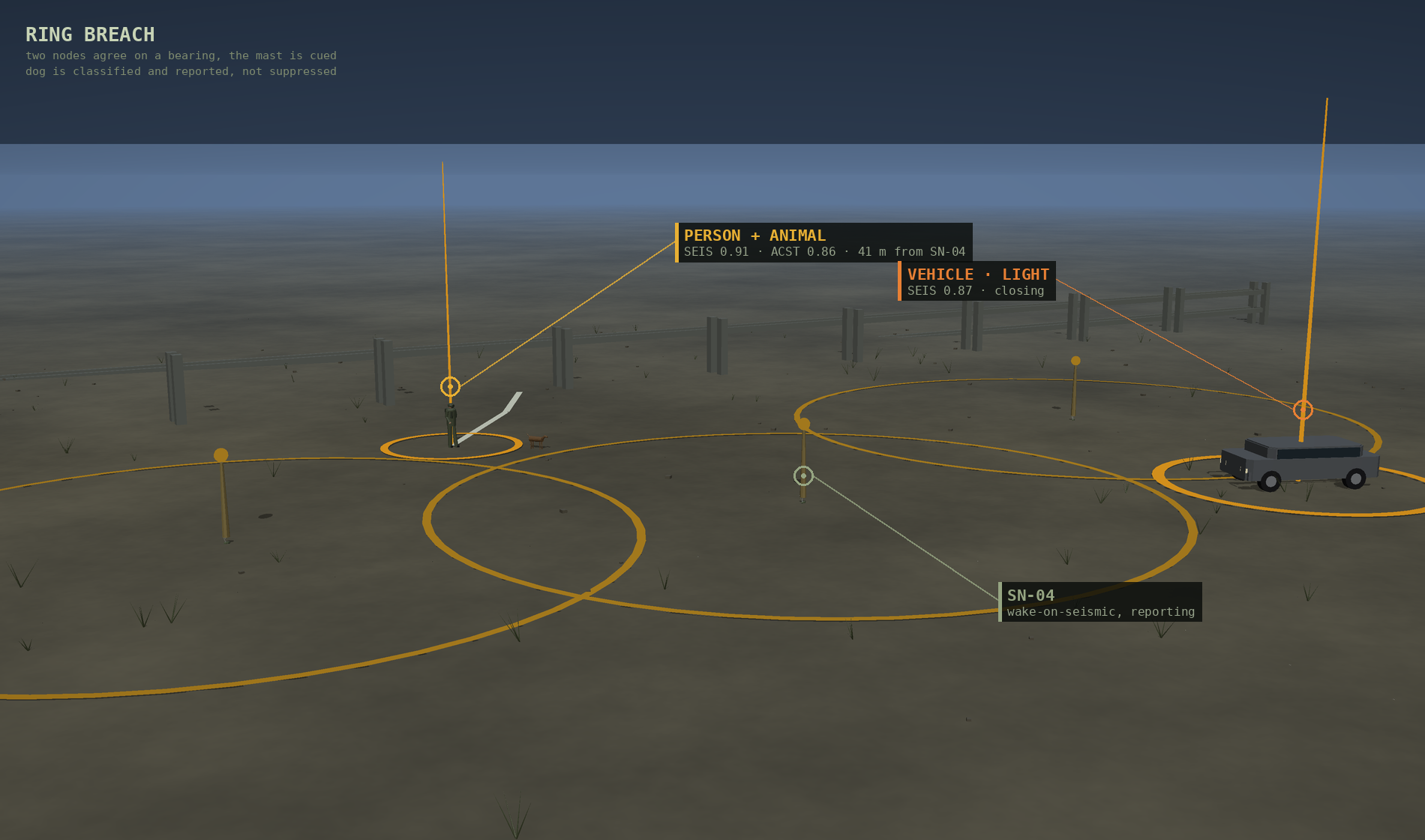
| Corroborate by fusing across domains | A seismic cue plus an acoustic cue from a neighbouring node is a stronger track than either alone. Fusion is where confidence is earned. |
| Suppress false alarms | Wind, rain, traffic, cooling equipment, and wildlife are the main sources of nuisance alarms for an unattended sensor. On-device models learn the background and suppress false alarms. |
02 · Three tiers of facility AI
AI is distributed, not centralised. Every tier runs the inference its power and vantage allow, and passes a smaller, richer product to the next.
| Tier | Runtime | Role | Status |
|---|---|---|---|
| Tier 1 · edge / node | STM32U575, generated INT8 / CMSIS-NN | Seismic and acoustic classification on the STM32U575 baseline, quantized for a battery budget. Hardware wake on seismic threshold or microphone Acoustic Activity Detect, then an ML pass confirms and classifies before any radio use. Audio is classified at the node; raw audio never leaves it. | transition |
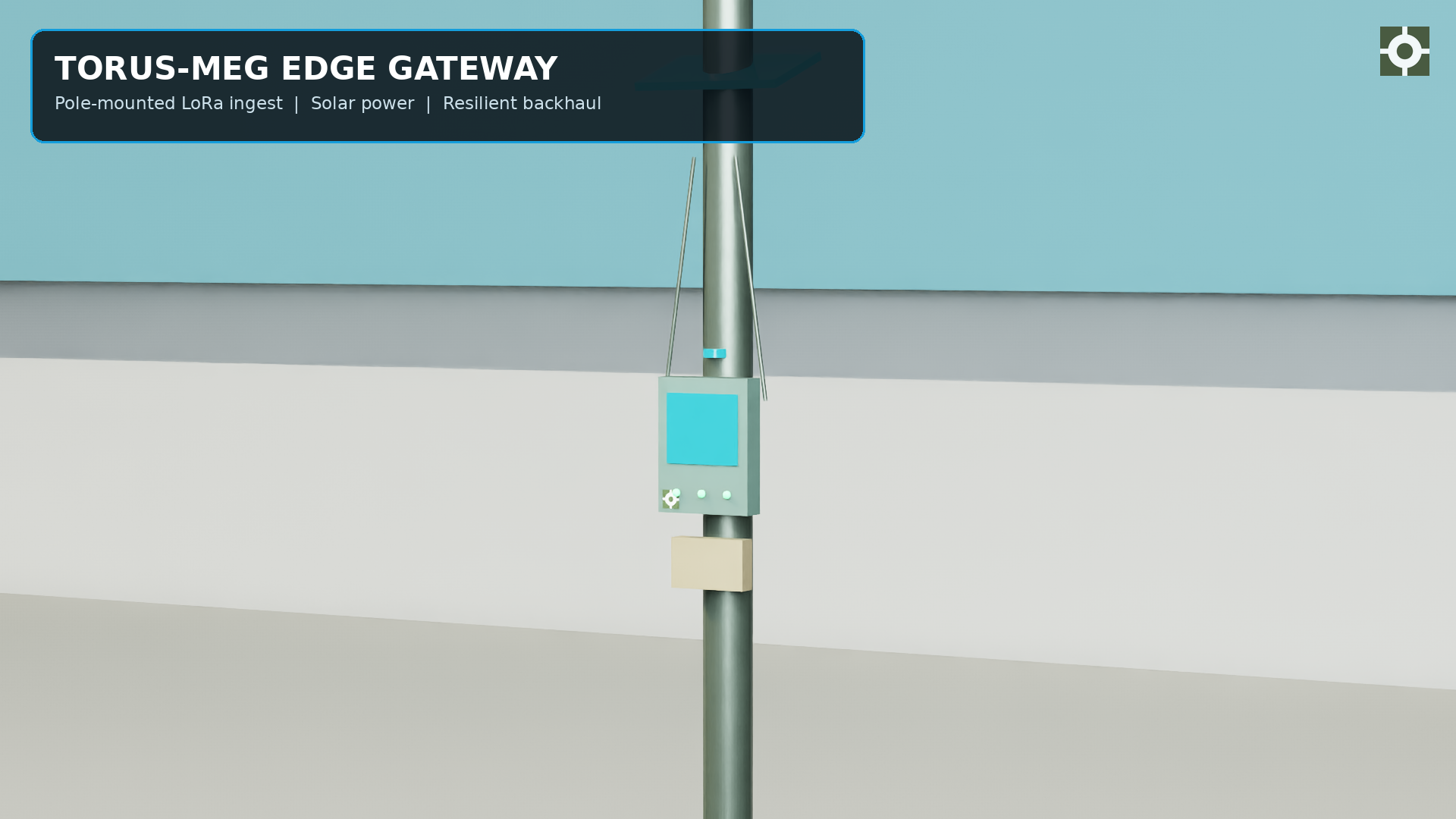
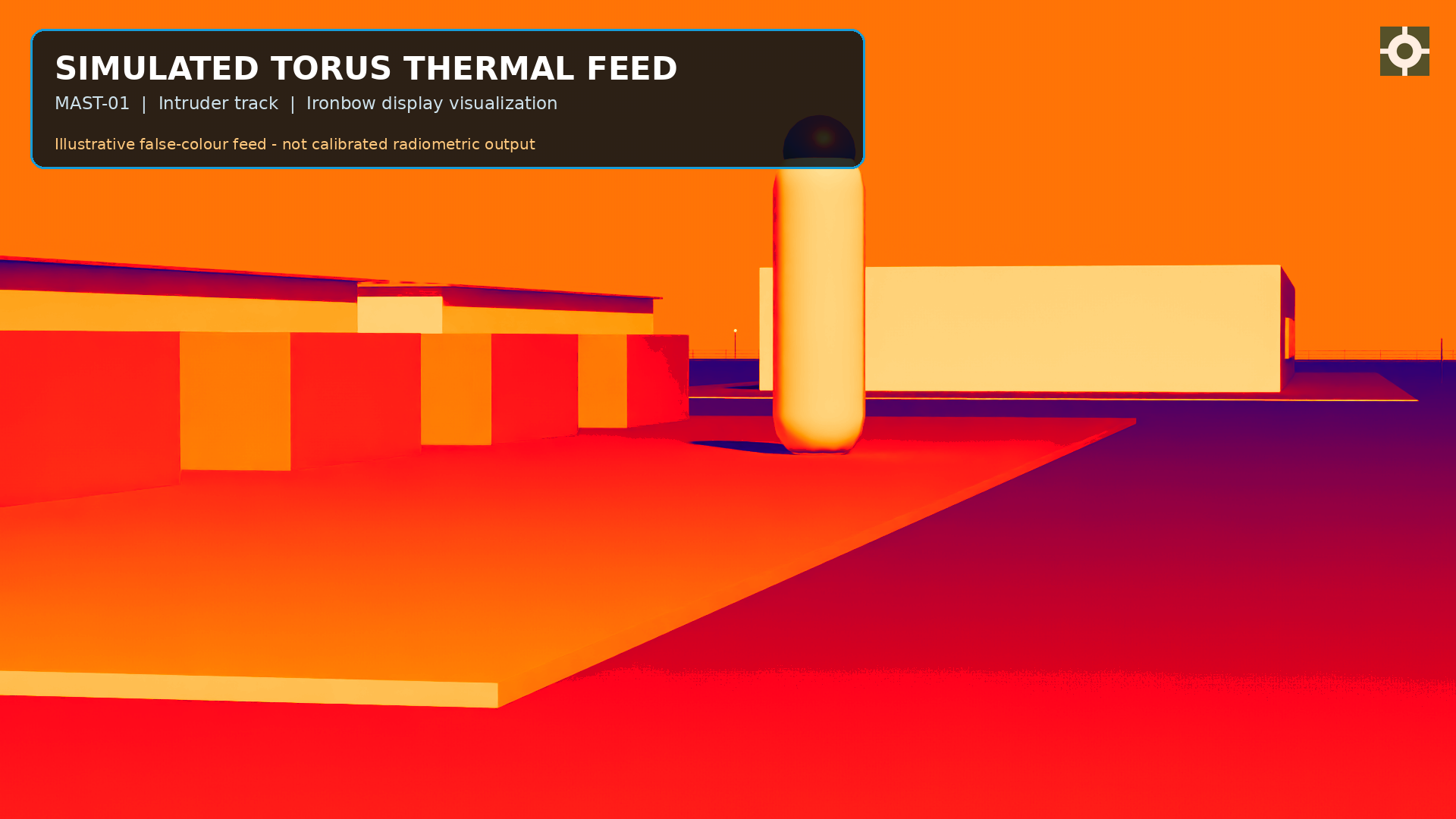
| Tier 2 · gateway / MEG | NVIDIA Jetson Orin | Thermal and visual inference on cued imagery from the masts. Detect, track, and classify at the gateway, so backhaul carries decisions rather than video. Multi-node fusion across the local ring happens before anything leaves the site. | concept |
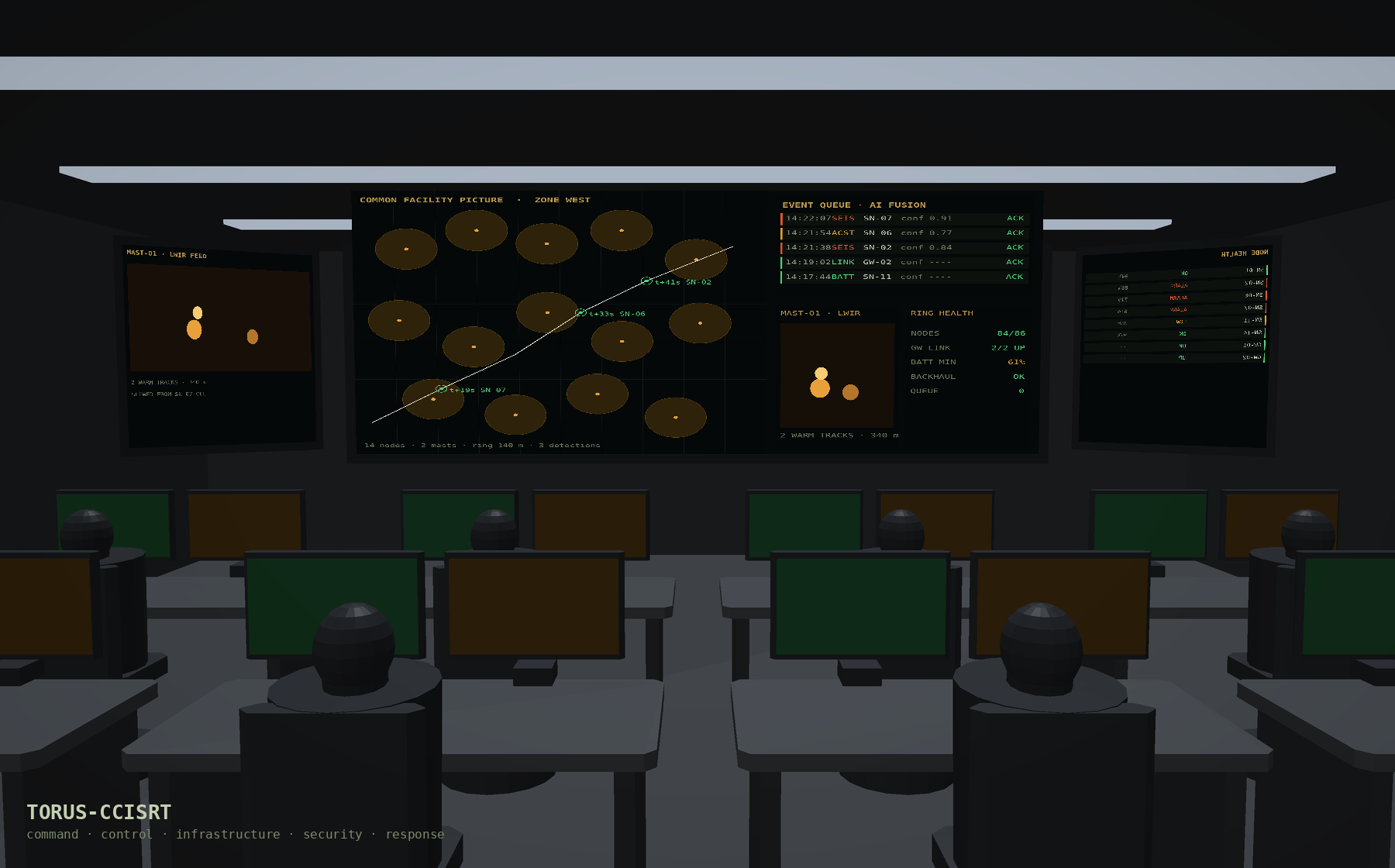
| Tier 3 · facility ops / CCISRT | CCISRT server | Clusters corroborating events across nodes into a single track with aggregate confidence. Explainable rule-based correlator today; a learned model drops in behind the same interface. | runnable |
03 · Edge inference at the node
At the node, TinyML confirms and classifies before any radio use. Event versus background discrimination cuts the message rate and the power bill. The node path is a statically compiled INT8 inference pipeline, not a general-purpose tensor runtime: PyTorch training, fixed-shape ONNX interchange, INT8 quantization with representative site data, STM32Cube AI Studio generation, and CMSIS-NN kernels where supported.
Vector math is a measured design gate
A Lattice iCE40 UP5K vector-math unit is carried as a measured design gate, not a production dependency. Retaining it requires a written non-power justification. Production node inference targets statically generated INT8 code with CMSIS-NN kernels where supported.
04 · Gateway-tier fusion and visual inference
The gateway receives the facility field, runs edge fusion, and where visual masts are attached, performs thermal and visual inference at the edge. This keeps raw imagery local while the backhaul carries compact decisions and fused events.
05 · Facility operations correlation
CCISRT forms tracks across the facility and suppresses false alarms. The correlator ships as transparent rules so an operator can see why a track formed. Learned models are introduced behind that interface, with the rule-based path retained as a fallback and a sanity check.
06 · Facility-event pipeline
Raw signal in, decision out. Each stage reduces data and raises certainty.
| Stage | Output |
|---|---|
| Sense | Raw signal from geophone, microphone, thermal, LiDAR, and RF at the node. |
| Classify | Edge TinyML labels the event and its confidence, and discards background. |
| Fuse | The gateway corroborates across the local ring and runs visual inference on cue. |
| Correlate | CCISRT forms tracks across the facility and suppresses false alarms. |
| Decide | The operator gets a validated track with location and confidence, ready to act on. |
Data reduction
A raw waveform becomes a labelled event, a set of events becomes a track, and a track becomes a decision, so the network carries kilobytes of event data rather than megabytes of feed.
07 · Models and method
| Tier | Runtime | Approach |
|---|---|---|
| Edge | STM32U575, generated INT8 | PyTorch training, fixed-shape ONNX interchange, INT8 generation with STM32Cube AI Studio, CMSIS-NN kernels where supported, and wake-gated inference. The optional iCE40 UP5K remains a measured design gate, not a production dependency. |
| Gateway | NVIDIA Jetson Orin | Accelerated detection and tracking on thermal and visual streams, on-site so raw imagery stays local. |
| Facility ops | CCISRT server | Rule-based correlation today, explainable and auditable; learned multi-target tracking and classification fusion drop in behind the same track interface; northbound REST and webhooks publish events to facility systems. |
| All tiers | Isaac Sim | Scenarios generate labelled data and validate detection and false-alarm rates before facility trials. |
08 · Data governance and roadmap
Classify at the source, keep raw data local.
| Area | Principle | Detail |
|---|---|---|
| Privacy | Raw stays put | Audio and imagery are processed where captured; only compact labelled events cross the network. |
| Signature | Less on the wire | Sending decisions instead of feeds cuts bandwidth, power, and RF signature, which supports passive facility monitoring. |
| Assurance | Auditable inference | Track formation and command actions are logged, so an analyst can reconstruct why the system decided what it did. |
| Now | Next |
|---|---|
| On-device seismic and acoustic classification at the node | Larger vocabularies and per-site adaptation via OTA model updates |
| Rule-based correlation and track formation at CCISRT | Learned multi-target tracking and cross-domain classification fusion behind the same interface |
| Isaac Sim scenario data for validation | Active learning from operator confirmations to cut false alarms over time |